
The Boat:
We could only bring one bag each.
Into mine went my ragdoll with a delicate red dress and yarn hair tied into clean brown braids.
Into Papa’s went extra clothes and shoes.
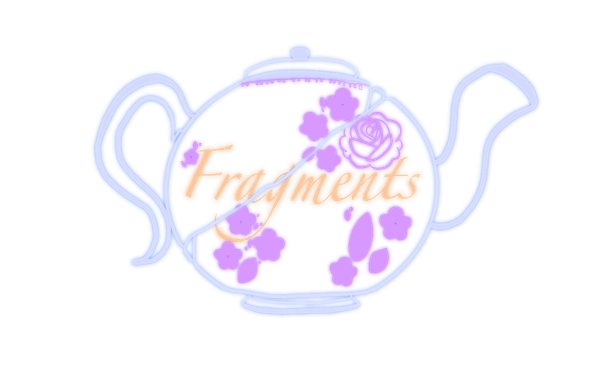
Into Mama’s went her pretty china tea set with pretty, purple flowers.
“This tea set was my mother’s,” Mama said. “Why do you care what I choose to carry on my own back?”
The sea air clung to my skin as I turned to take one last look at home.
Papa pushed my shoulder, urging me along from behind.
Arrival:
Papa picked me up, and it was like I could see across the whole ocean. I waved at a green woman holding a torch like a stirring spoon high above her head.
She smiled at me as we came closer.
When our boat reached the shore, we were ushered off by pale-skinned men who spoke to each other in unfamiliar words.
Mama stepped onto the pavement, and her bag tore with a loud rip.
A teacup fell in slow motion to the floor.
The world went silent to hold space for the ringing.
My eyes stung. Mama bent to pick up the fragments.
“Leave it,” Papa said, his hand on her arm. “It’s only a teacup. We’ll get trampled if we stop moving.”
We left the pretty china teacup with pretty purple flowers to be crushed by the mob of immigrants. I tripped looking back and Papa pulled me forward.
Homemaking:
One teacup short, the pretty china tea set with pretty purple flowers sat on the top shelf of Mama’s kitchen.
Mama cleaned it every weekend, gently wiping the dust off with a stained, calloused hand.
Just in case.
Fitting in:
In America, I made a friend with braids that fell down her back like ropes of gold. Her words were unfragmented and her teeth sparkled in a straight white smile. “You should invite Charlotte here,” Mama said. “I’ll take the tea set down and you can have a tea party.”
Charlotte arrived with a coffee cake she made with her mother and Mama decorated the table with yellow flowers and a pure white tablecloth. She left us alone with the tea set.
“This is beautiful.” Charlotte held up the pretty china sugar bowl with pretty, purple flowers, admiring it from every angle.
I smiled. “I know, it’s my Mama’s.”
I looked away for just a moment.
The china sugar bowl fell onto our floor with a crack that echoed through the country.
The bowl shattered, mixing sweet white crystals with fragments of china.
Deaf to the apologies of an American girl who did not know what she had done, I grabbed the dustpan and broom, hoping to hide the pieces away before Mama could see.
But she heard the crack.
I rushed to explain.
“It’s all right,” she said to us. She took the broom from my hands. “it’s only a sugar bowl.”
But that night, I heard her repeating the story to my father, weeping into his shoulder.
“It’s all right,” he said. “we can buy a new sugar bowl.”
Mama didn’t want a new sugar bowl. She wanted her mother’s pretty china sugar bowl with pretty. purple flowers.
Pouring:
Mama took the tea set off the highest shelf. “I’m going to teach you how to pour tea for your friends. That is what we did back home.”
I knew better than to tell her that my friends and I drank soda from narrow glass bottles that never needed pouring. I sat quietly in the hardbacked kitchen chair while she made the tea.
Mama demonstrated, holding the pot steady in her arms. She handed it to me.
I took the pretty china tea pot with pretty, purple flowers and tried to mimic her motions.
But it was heavier than I expected and my hands fumbled.
The teapot fell. The world shook in a silent rage.
Hot brown liquid spilled through the crack in the bottom, staining our white tablecloth.
“I’m sorry, Mama. I’m sorry.” Tears poured down my face.
Mama picked up the fragments with careful motions, her mouth set in a straight line. She took the pretty china tea set with a mismatched sugar bowl and placed it back on the top shelf of her kitchen cabinet.
Leaving:
A man who had always made me smile offered me a pretty diamond ring with a band made of silver.
Papa helped me pack my things into two bags.
Mama handed me a third: her pretty china tea set with pretty, purple flowers. “Use it well.” She embraced me. I held onto her just a little tighter when I saw the twin tears running down her cheeks.
In my new kitchen, my mother’s tea set sat on the highest shelf in the highest cabinet. I tried cleaning it, taking it down about once a month to wipe a rag quickly along the delicate ceramic.
Just in case.
My Daughter:
I only had one child: A girl with eyes like twin stars and a smile that made her father slam the door in the faces of young boys.
When she was old enough, a man offered my daughter a shining diamond ring paired with a plain band of gold.
I watched from the window with a bittersweet smile as her husband helped mine load her things into the truck. The young man’s arms trembled under the weight.
She ran down the steps two at a time, carrying a bag on each shoulder, and one on her back.
I handed her one more: my mother’s pretty china tea set with pretty purple flowers and a few too many missing pieces.
“We have no space for it,” the young man said, placing an arm around my daughter’s shoulders. “I’ll buy her a new tea set, one more beautiful than any other.”
I didn’t want my daughter to have a new tea set. I wanted her to have the pretty china tea set with pretty, purple flowers that my mother carried on her back as she boarded the boat to America.
But I looked into my daughter’s eyes and placed the china tea set back onto the top shelf of my kitchen cabinet.